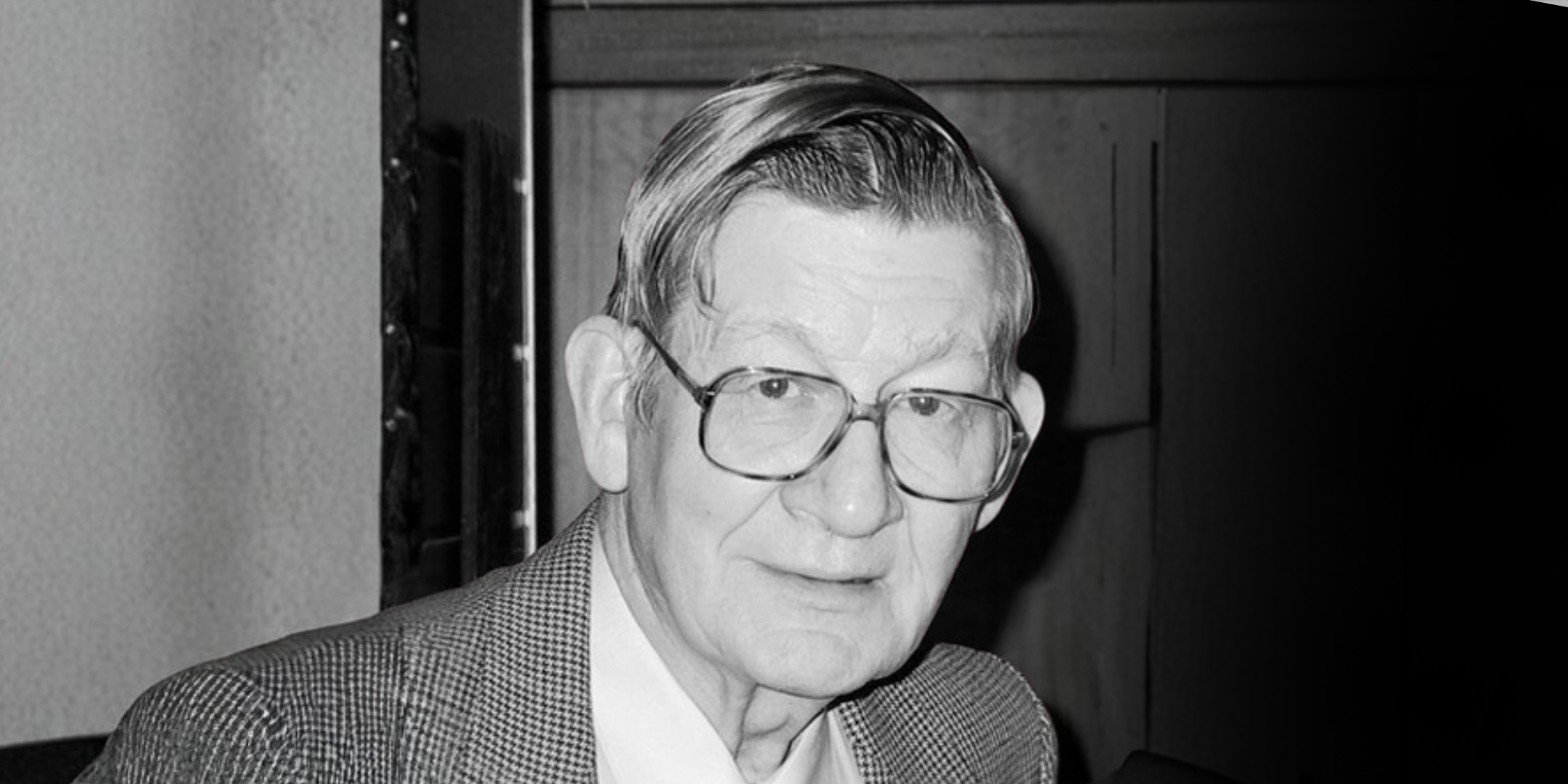
In peak form at the operating table, Dr Ken Clezy was a sight to behold. He swapped tendons from the back of the hand to the front of a finger “like a cardsharp shuffling,” a colleague recalls.
Soon after, fingers could once more straighten and flex. Another restored hand joined his count. So it went, from the ward round at 8am to the last case of the evening and, for a surgeon on call around the clock, beyond.
Those hands belonged to leprosy patients. Ken Clezy, who died in May aged ninety-six, is internationally recognised for founding leprosy surgical services across Papua New Guinea.
He was among Australia’s most decorated surgeons: honoured with an OBE, an AM, and medals from his own college and from the neurosurgeons besides.
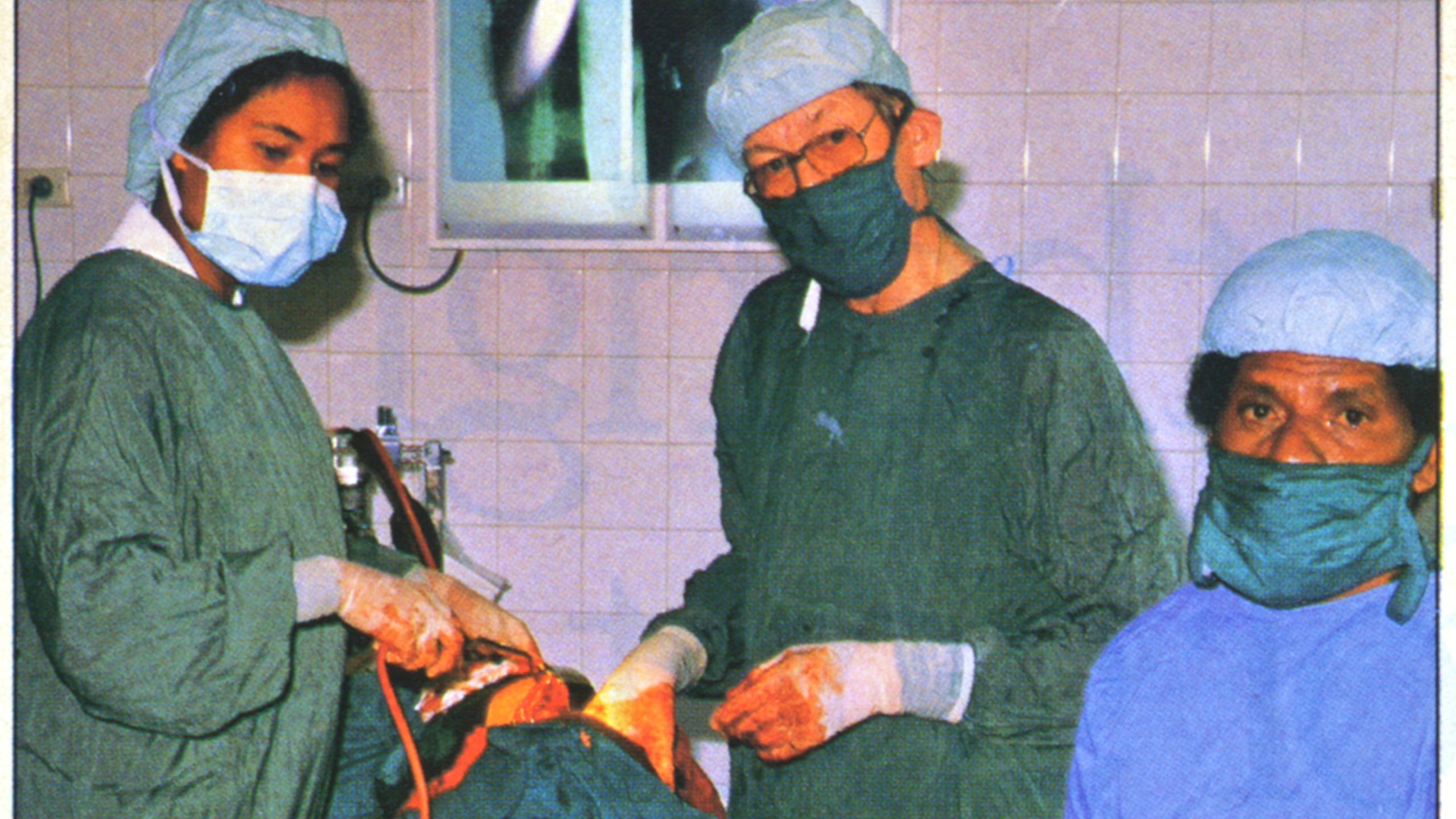
Clezy trained in India under Dr Paul Brand, supported by a WHO scholarship. He brought leprosy reconstructive services to Papua New Guinea, saving many limbs and restoring patients to their communities. “Our ward was the happiest in the hospital,” he wrote in 2011.
There were few surgeons in PNG when he began in 1960. The work was relentless. In December 1965 alone, his log records thirty-five footdrop corrections: more than the lifetime total of the authors of the only textbook chapter on the subject.
The stamina was matched by inventiveness. Some leprosy patients had lost the ability to close their eyes, leaving the cornea susceptible to drying. But by borrowing some muscle fibres from the masseter jaw muscle, “about the size of a woollen thread,” he tunnelled them under the skin at the upper and lower edges of the eyelids, so the patient could close the eyes by clamping the jaw.
“This was magic,” recalls Dr Daryl Teague, then Clezy’s intern. “I was impressed, the patients were restored.”
The most exacting of surgeons in theatre was equally the most compassionate of human beings. His faith, he believed, called him to look upon every human as his brother or sister.
Dr Teague distinctly remembers a case at Port Moresby in 1972. A Papuan United Church leader presented with a dilating aneurysm of the common iliac artery. As Clezy planned the surgery, news came that the patient had collapsed in the ward and died.
“Mr Clezy was so upset, cross with himself for not intervening sooner,” Teague recalls. “He was in tears, the tears of the caring. This was a lesson for me.”
From 1960 to 1988, Clezy operated from Rabaul in the east, across Madang and Goroka, south to Port Moresby, where he was Dean and inaugural Professor of Surgery. Among the first to manage splenic trauma in adults without operating, he left his name off the published paper; the credit went to the other surgeons.
Later came Burnie, Tasmania, and Yemen, where the hospital was attacked by a terrorist and grocery shopping required a soldier escort armed with an AK-47.
Fuelled by faith, invention and compassion, Ken Clezy knew the work could not stop with him. A gifted teacher, he sought to train the next generation.
Clezy is “the ideal surgical teacher,” recalls colleague Dr Alan Scott. “When he assists you, he never appears on the surface to be doing very much at all. But he is always there to proffer help and advice and show you the little tricks that are so important in surgical techniques.”
He talked trainees through draining a brain abscess by feel, “like probing through a mandarin skin into the fruit.”
His legacy is far-reaching. “He was instrumental in my wanting to become a surgeon,” one Australian colorectal surgeon reports. “He has done that for the generations of doctors before and after me.”
In word and deed, Dr Ken Clezy showed that every human being deserves care and compassion, whatever their ethnicity, creed, gender or age. His life issues an invitation: many of us hold this belief, but how many have the faith, determination and courage to act on it?
The work to end leprosy continues, and you can be part of it. Together we can end leprosy, along with the disability and discrimination it brings.
For more stories like this, you can browse our full collection here!