The Leprosy Mission has been pursuing its goals for 150 years. It was founded in 1874 by Wellesley and Alice Bailey in Dublin, who thought “if ever there was a Christ-like thing to do” it was to care for leprosy sufferers, body and soul. Caring for those most neglected, most outcast, most in need, because that’s how Jesus cares.
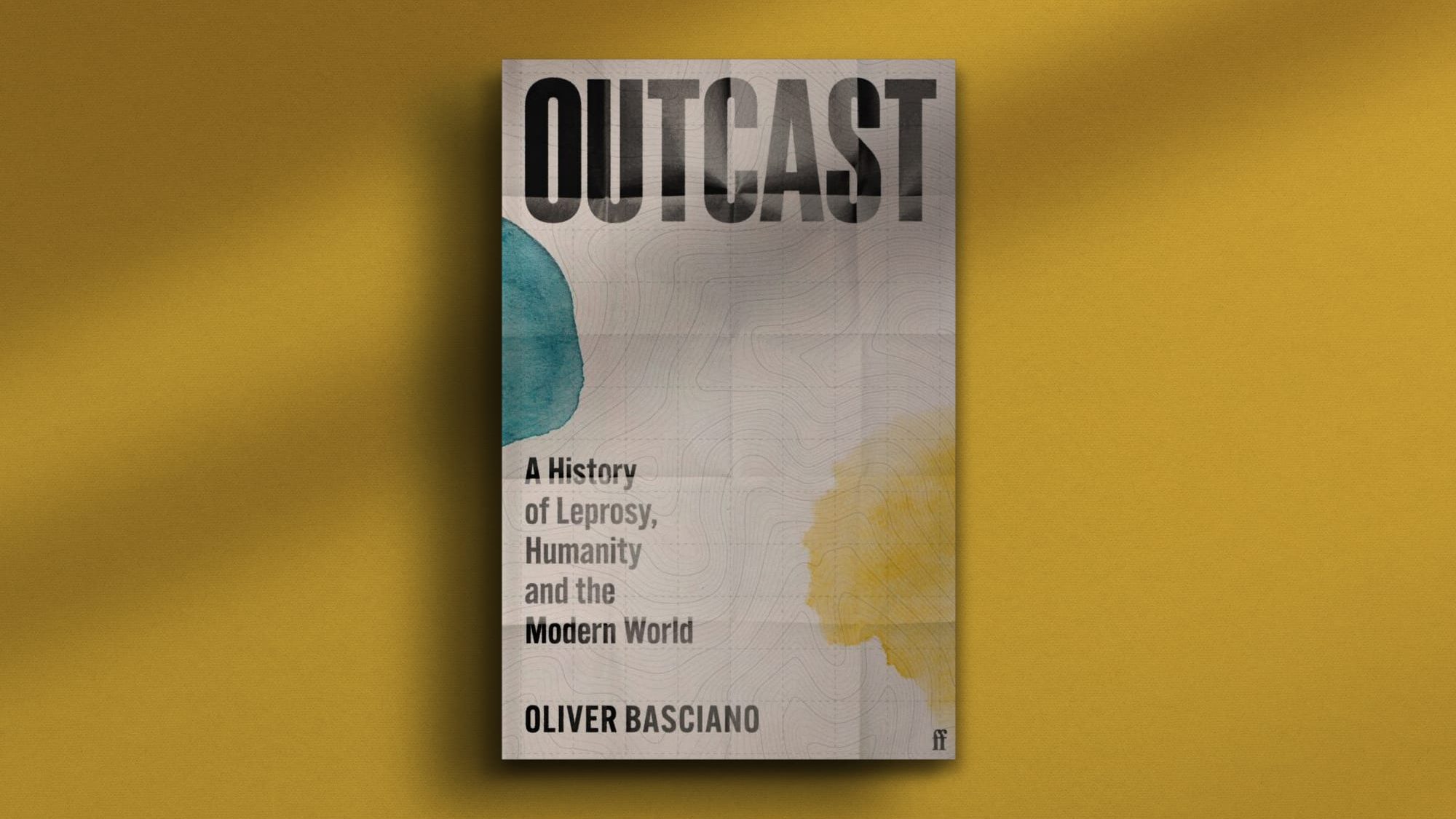
So it was disturbing to find that the epigraph of Oliver Basciano’s book Outcast on the history of leprosy was an antagonistic quote from Graham Greene’s famous novel, A Burnt-Out Case:
“What strange ideas people have about leprosy, doctor.”
“They learn about it from the Bible, like sex.”
However, my fears were (almost) unfounded, as Basciano has written an empathetic, stylish and engaging travel-narrative history of leprosy’s impact around the world since the Middle Ages. Nevertheless, he does have a critical take on the way religious groups and civic leaders may have ‘milked’ leprosy for other ends. It’s a fascinating thesis.
The book sets itself in the Trump era (first term), where breathless TV presenters are describing hordes of immigrants pouring into the United States with “diseases like leprosy and TB that are gonna infect our people” (p.1).
In the 21st century, leprosy is still being depicted as one of the most feared of things: a foreign invader coming to take us over. And this, despite the fact that any American who contracted leprosy could be treated by a regular doctor with a course of antibiotics.
Basciano writes, “To be called a ‘leper’ is now a mark of the other and a slur. Leprosy is a cultural artefact, a costume and a mask; a turn of phrase, a metaphor. It is a receptacle for nightmares and prejudice, a synonym for the lost and the cast-out”. He cites Susan Sontag: “Nothing is more punitive than to give a disease a meaning” (p.4).
Outcast is a book primarily about the stigma associated with leprosy—the fear, disgust, repellence—to what extent it was justified, and to what extent it was used politically, religiously and socially in order to achieve other goals. It’s also about how leprosy sufferers and survivors have ‘fought back’—or at least tried to do so.
Basciano writes beautifully, taking the reader around the world to sites of significance in the history of leprosy and interviewing people who have had the disease and recovered, as well as some who are in the midst of its inflictions.
The book begins with an excellent overview of the medical reality of leprosy: it’s a slow-replicating bacteria that most people can fight off with their natural immune system. But for the 5% of people who can’t, it becomes a living nightmare if treatment can’t be found.
Damage to skin, eyes, nerves, extremities. Most of us have seen pictures of people suffering from untreated leprosy. It can be very difficult not to look away. This history of the treatment of people with leprosy is confronting, and in many ways deeply shameful, in the manner of histories of slavery, indigenous peoples, and HIV/AIDS.
But it’s a complicated history. Without lacking empathy or understanding, Basciano wishes to complicate it further by examining the role leprosy plays in other discussions of exclusion around sexuality, religious creed, political circumstances, and class.
Beginning in the town of his childhood, St Albans, west of London, the book examines the relationship of the 12th century leprosarium with the town itself. His summary observation is that the leprosy sufferers there were not as ostracised as the Victorian Church led people to think.
Basciano argues that the Church, in its missionary zeal, sometimes exaggerated the maltreatment of people with leprosy. Sufferers were a convenient cipher for sin, decay and all that needs to be hidden away. In truth, people with leprosy participated more broadly in social life than is often claimed.
Basciano draws on medieval scholarship to make the case that people with leprosy were not always outcast in the manner that 19th Century gothic storytelling makes out. In fact, thanks to the spirit of Christian charity in the abbeys and monasteries, they were cared for in special ways. He notes that some were given Feast Days, granted a roast pig each, and certainly didn’t have to march around declaring themselves unclean.
Leprosy in the Middle Ages (and earlier) was seen as a curse. But it was also a means of purgation. If you suffered leprosy through your life, God might consider you purified at your death.
The person with leprosy can be perversely envied: they are getting their punishment over and done with in this life. Or so it was thought.

This will be a difficult perspective for leprosy sufferers to hear. Although there is evidence that some 19th century tales of leprosy are in part fabricated examples of gothic influence on storytelling, the evidence is in the main telling us that leprosy was a life sentence of one kind or another.
The accounts of horrific deprivation, exclusion and abuse far outweigh the cases of inclusion and care. Nevertheless, it must be said that history also records beautiful moments and movements of care for those affected by leprosy.
Basciano carefully explores the complex history of Gerhard Hansen, the Norwegian scientist who discovered the leprosy bacteria, Mycobacterium leprae, and whose name is preserved in the now-common term Hansen’s disease. He eventually established that the bacteria is the cause of the disease leprosy, but he also promoted the segregation policies that caused so much suffering for several centuries. He argued that healthy people had the “right and duty” to isolate leprosy sufferers for the greater good. This utilitarian argument stood sway until well into the mid-20th century.
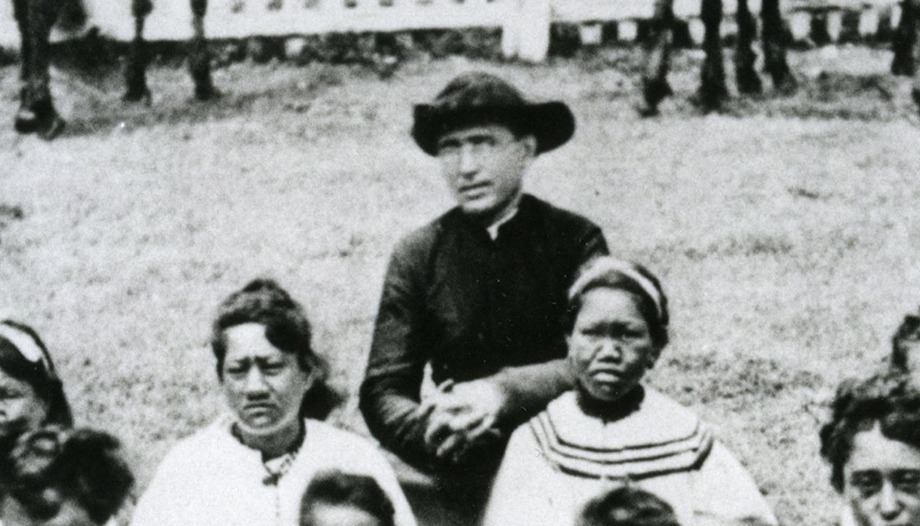
The chapter on Father Damien’s work on the island of Molokai in Hawaii reveals Basciano’s critical interests in how disease and perceived moral transgression are linked. As the Western Catholic church came into contact with the ‘morally loose’ Hawaiians, sexual degeneracy took over.
Father Damien was accused of immoral engagement with his parishioners, but this was never demonstrated to be true. But the damage was done: disease and sex were intertwined, and keeping both away at least an island’s distance was recommended.
As Basciano travels across Russia, South Africa and Brazil, he provides intriguing accounts of the way a society’s social ethic interplays with a disease like leprosy.
Can the sick live in public view? Do they have to socialise only with other sick people? Can well children remain with sick parents? When is a disease also a cancellation of citizenship?
With the discovery of the medical cause of leprosy, do religious or superstitious interpretations of the disease decrease? Or it is still a disease with a meaning?
At the book’s outset, Basciano asks: “Does a society’s sense of itself always rely on ostracisation?” In the context of today’s rising nationalism and xenophobia, it’s a pertinent question. People with leprosy have often represented the outsider, the alien, the zombie—half alive, half dead—and the damned. That is changing, but it hasn’t yet changed.
The history of leprosy is a dreadful story of suffering and exclusion, and Basciano does not deny this. What he wants to raise is the possibility that sometimes the ‘outsider’ is used by society in its attempts to define what is good, true and beautiful by what it claims is not.
I believe Basciano underplays the importance of Christian missions in opposing the rejection of people affected by leprosy. However, he also highlights the misunderstandings, fears and cruelties that led to practices of isolation and exclusion. He creatively brings together historical and contemporary stories and concerns: leprosy, although curable and on the way to elimination, is still affecting hundreds of thousands of people every year around the world.
Strangely, India is largely left out of this particular narrative. It is notable because it accounts for more than half the remaining leprosy cases in the world (and was the country in which the Leprosy Mission began its work back in the 1870s).
I would have liked to hear Basciano’s analysis of its complex interaction of colonialism, class, religion and medicine. Perhaps that part of the story is too vast and remains for another book. For those interested, Abraham Verghese’s monumental 2023 novel, The Covenant of Water, provides a fictional way into that protracted and ongoing story.
A final note on the book itself: Faber and Faber has long been my favourite publishing house and this book enhances my view. It is a well-produced hardcover with lovely case bound binding and is beautifully typeset. Like a Bible. It honours the subject matter to give the stories of stigmatised people such a dignified and uplifting presentation.
This article was originally published by Zadok, a quarterly magazine to promote informed theological reflection on contemporary issues in Australian society.
For more stories like this, you can browse our full collection here!