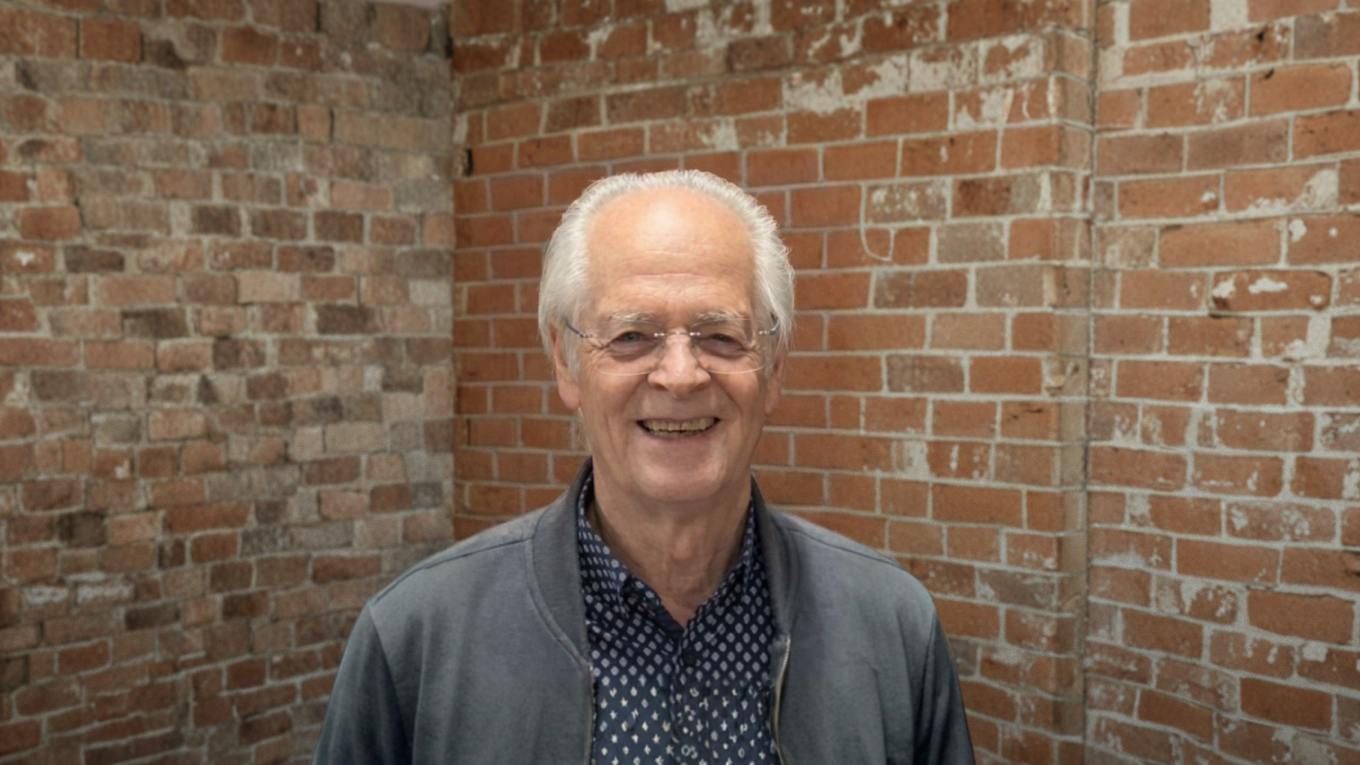
Across 19 years, Peter Warren travelled thousands of kilometres speaking about leprosy to people who often thought the disease belonged to another time. Years later, he’s still challenging many of the same misconceptions.
Whether it’s a passing comment, a news story or a conversation after church, mention leprosy and Peter Warren cannot help joining in.
For nearly two decades, Peter served as The Leprosy Mission’s state director in Western Australia, travelling across one of the world’s largest states to raise awareness, inspire support and challenge misconceptions about a disease many Australians believed had long since disappeared.
But when he first considered taking on the role in 1993, it was not an obvious next step.
He didn’t think it was for him – and then couldn’t sleep
In 1993, Peter was nearing the end of another mission role when a former colleague mentioned that The Leprosy Mission needed someone to head up its work in Western Australia.
“I don’t know about that,” he remembers thinking. “It’s probably not for me.”
Then he went home and barely slept.
“God spoke into my heart,” he says. The next morning, Peter rang to find out more.
Soon afterwards, he was invited to interview with the board in Melbourne. Looking at the cost of airfares, Peter spotted another option. A return bus ticket cost a fraction of the price.
The journey took almost three days.
“I think they were impressed,” he says. “I was going to save them money right from the start.”
He came home with the job and no obvious idea of where to begin.
So he wrote letters.
Peter contacted churches of different denominations across Western Australia, introducing himself and offering to visit if they needed a guest speaker. The replies began to arrive and his calendar filled. Over the next 19 years, he covered most of the state, as far east as Esperance.
Taking the message further
Peter didn’t limit his message to church audiences. Rotary clubs, women’s groups and other organisations invited him to speak. For several years, he taught about leprosy at a primary health care school.
At one point, he placed an advertisement in Have A Go News, a free newspaper for older Western Australians available in shops. It featured a cartoon of a man holding a magnifying glass, with a tiny figure beneath it.
“Are you looking for an interesting guest speaker?” it asked, before offering a talk about a “much misunderstood disease” and how it could be cured. The ad brought more invitations.
It was all part of what Peter calls “deputation”, the old-fashioned business of travelling from town to town to speak about The Leprosy Mission.
On trips through the Pilbara and Kimberley, Peter Warren travelled by bus with an overhead projector, a screen, boxes of books, a banner, a suitcase and whatever else he needed for the churches and community groups waiting along the way.
“What have you got there?” bus drivers would ask, surveying the pile. These days, Peter jokes, you could stick most of it on a thumb drive.
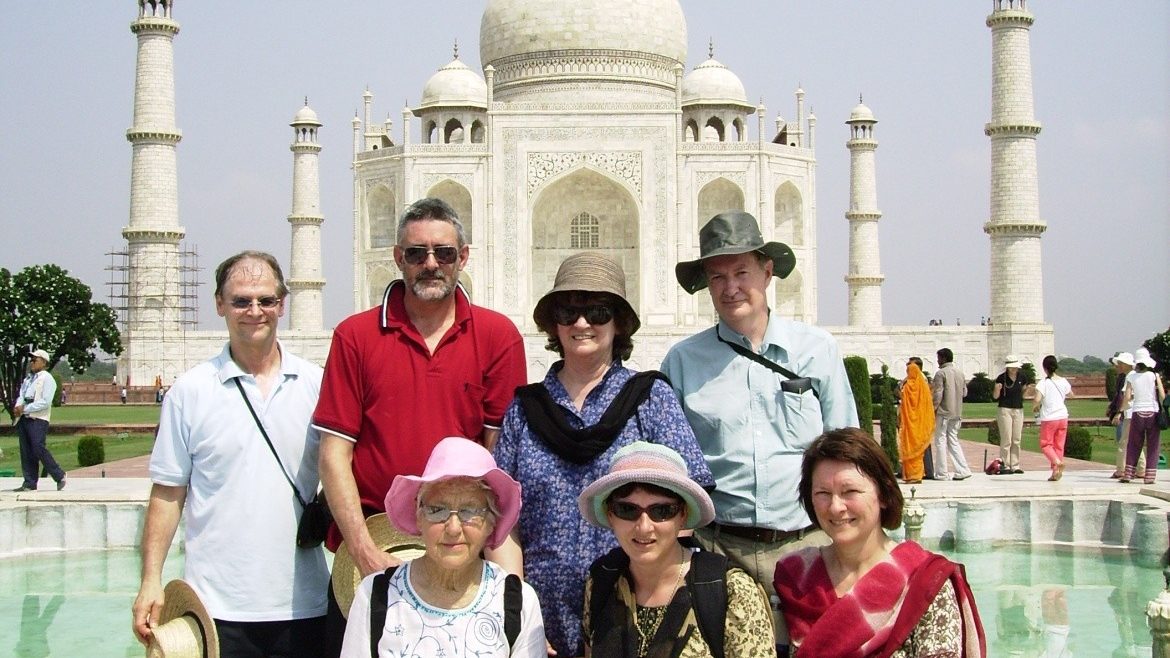
Bringing awareness, one conversation at a time
But for Peter, the most important part of the job was never the equipment or the presentations. It was the conversations.
He enjoyed the questions at the end of a talk. He enjoyed staying with supporters in country towns and continuing discussions around the dinner table. And he especially enjoyed seeing attitudes change.
Across the years, Peter realised that many people knew very little about leprosy beyond the stereotypes they had inherited.
One misconception particularly troubled him: he often heard pastors referring to “lepers” from the pulpit. “Pastor, please don’t use that terminology,” he would tell them. “These are people. These are people who are affected by leprosy.
“If you had cancer, we wouldn’t call you a cancerer,” he says. “We say you’re a person affected by cancer.”
For Peter, changing language was about more than words. It was about restoring dignity.
Seeing lives transformed
That conviction deepened as he began visiting The Leprosy Mission’s work overseas.
One of his earliest encounters with someone affected by leprosy came during a hospital visit in southern Africa.
The man had severe foot ulcers, and Peter admits he initially found what he saw confronting. But something else left a deeper impression: that the nurses tended to the man with kindness, without drawing away from him.
Over the years, Peter saw what was possible when treatment, rehabilitation and opportunity replaced fear and isolation.
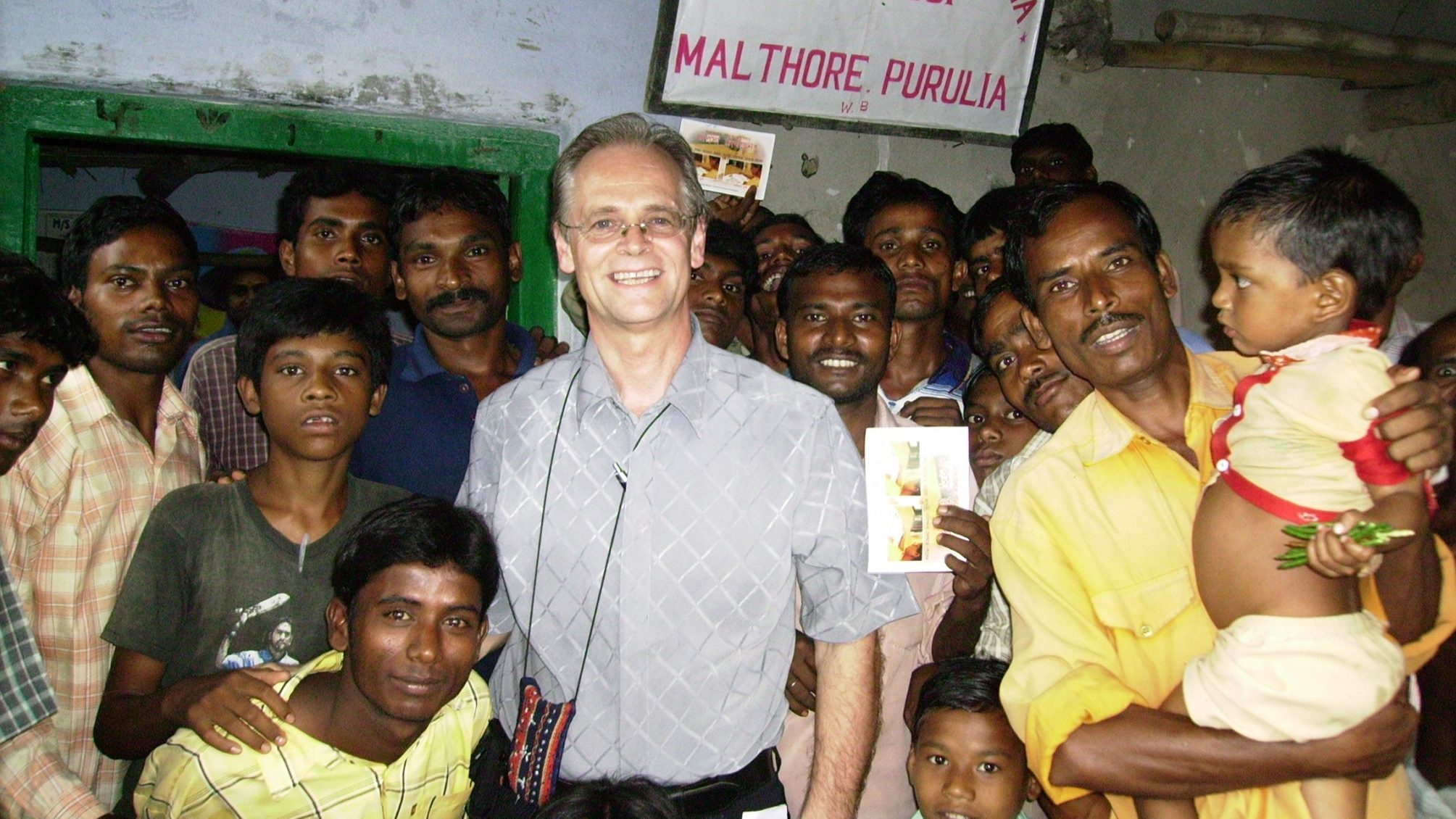
On later visits to India, Peter observed reconstructive surgery that helped restore movement and protect eyesight for people affected by leprosy.
In one procedure, a surgeon used a tendon from a patient’s leg to help an eye blink again, reducing the risk of blindness.
Another tendon transfer allowed a hand that had clawed shut to open again. He also saw footwear and prosthetic limbs being made to fit individual patients.
At the Bankura Vocational Training Centre in rural West Bengal, young people affected by leprosy were learning trades that could lead to employment. Peter later took groups of Australian supporters there, sometimes visiting former trainees at their workplaces.
“Oftentimes the stigma is even worse than the disease itself,” he says.
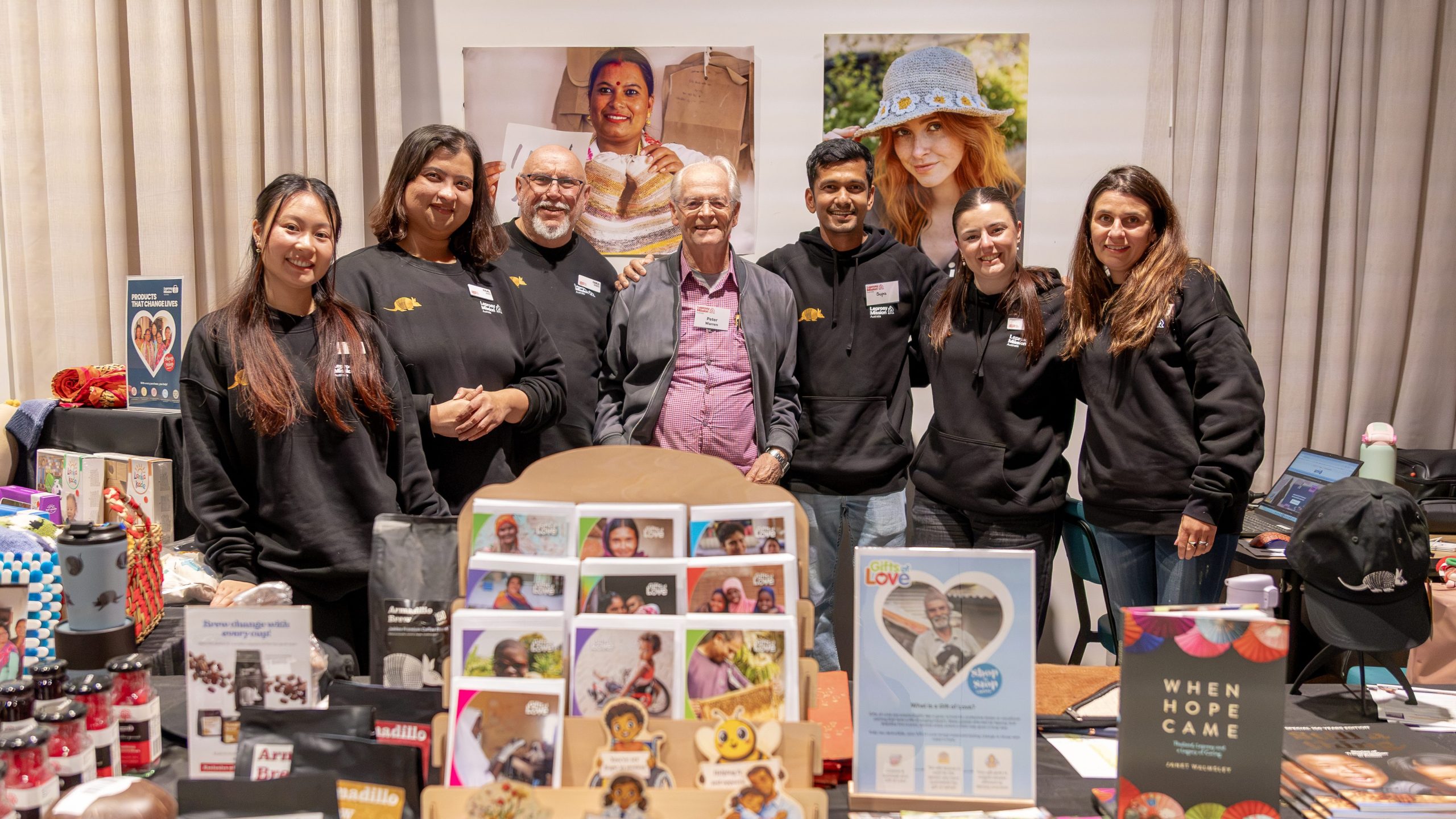
Peter’s role also encompassed launching the Overseas Aid Shop in WA, selling pre-loved clothing and bric-a-brac as well as Leprosy Mission merchandise. Ventures like this were important milestones in the history of today’s Leprosy Mission Shop.
Through it all, Peter credits his wife Kathryn as a vital source of support – calling her his “number one volunteer”. “She’s been the wind beneath my wings. Without her support, I doubt I could have done it,” Peter says.
He also credits the WA State Advisory Committee as an integral support along the way.
Long before websites, social media and email campaigns, Peter spent years helping Australians understand that leprosy is curable, that lives can be transformed and that people affected by the disease deserve respect, not fear.
Today, much of that communication happens online. But some things have not changed: leprosy still exists, and misunderstandings about it do too.
And Peter is still ready to talk about both.
For decades, Peter travelled Western Australia teaching people that leprosy is curable. Just as importantly, he taught them that people affected by leprosy are more than a disease.
Decades later, it remains a lesson he cannot stop sharing.
“It’s still in my blood,” he says.
For more stories like this, you can browse our full collection here!