

Not every clue to leprosy can be seen on the skin. Scientists are testing whether machine learning can identify patterns that are easy to miss and give health workers better information for diagnosis and treatment.
A pale patch appears on your arm. It doesn’t itch or hurt, so you leave it alone. Months later, you notice you can barely feel the skin when you touch it.
Would leprosy cross your mind? It might not occur to the health worker examining you, either.
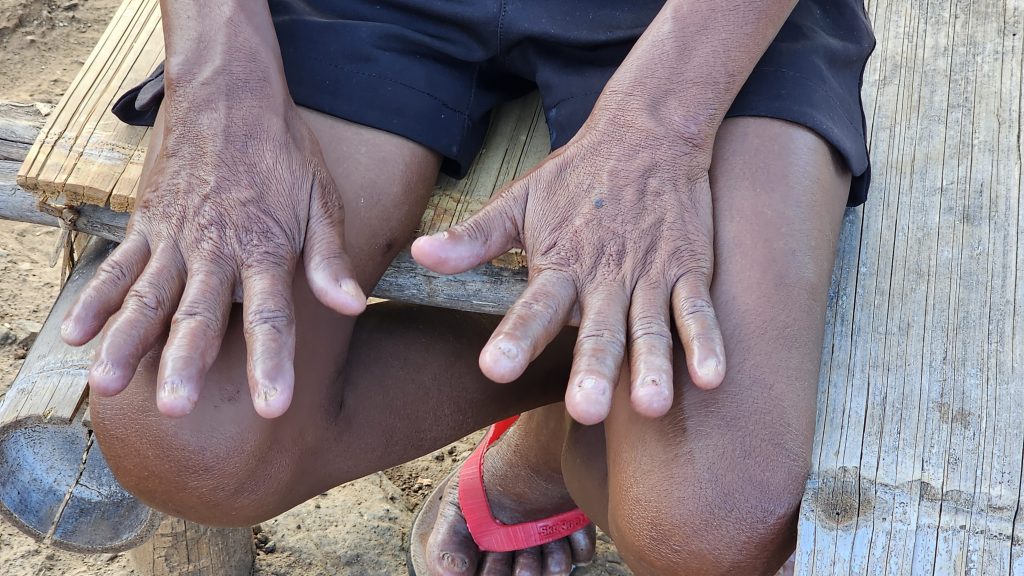
Doctors have called leprosy the great imitator. It can resemble psoriasis, lupus, inflammatory arthritis or even nerve damage caused by diabetes. Symptoms may take years to emerge, and health workers who have never encountered the disease can struggle to recognise it.
Now researchers are exploring whether artificial intelligence (AI) could help spot the clues earlier and make specialist knowledge more accessible.
So how have AI and leprosy diagnosis been explored together? One approach starts with nothing more elaborate than 14 questions.
Who gets sent to the specialist?
In Brazil, a questionnaire asks about possible signs of leprosy, including trouble buttoning a shirt, changes to the skin and loss of eyebrow hair. Developed in Brazil for active case finding and used in screening programs, it uses a simple approach: answer yes to any question and you may be referred for further examination.
That catches many possible cases, but it also sends people without leprosy for appointments they don’t need. In communities with few specialists, those appointments may involve hours of travel.
Researchers trained machine-learning software to identify patterns in questionnaires from more than 1,800 people whose diagnoses were already known. Rather than treating every yes equally, it considered combinations of answers and tested what it had learned against cases it hadn’t encountered before.
The result was a trade-off. Compared with the original questionnaire, the software correctly cleared 15 more people who didn’t have leprosy, but missed two additional people who did. The simple method was better at catching cases; the computer was better at reducing unnecessary referrals. Those unneeded appointments also take up scarce specialist time.
The model also gave greater weight to nerve-related symptoms than to visible skin changes, reflecting what specialists understand about early leprosy. Whether that knowledge can be put to practical use without increasing missed diagnoses is something researchers still need to establish.

What a photograph can’t tell you
Recognising leprosy from a photograph sounds straightforward when software can already identify plants, animals and landmarks. But skin lesions are only part of the picture.
In Brazil, researchers used more than 1,200 carefully standardised photographs taken at a specialist clinic. They tested whether software could tell leprosy apart from other skin conditions, first using images and then adding information gathered during patients’ examinations. The combination was more useful than photographs alone.
A photograph might show a discoloured patch, but it can’t tell whether someone has lost sensation there.
Another research team evaluated an AI model developed for the World Health Organization’s work on neglected tropical skin diseases. Instead of giving one diagnosis, the model offered several possible conditions for each photograph. Leprosy often appeared on that list when the person was already known to have the disease. But the model struggled with less typical cases, and the study couldn’t show how often it might wrongly suggest leprosy in people with other conditions.
Ask the people who’d use it
During fieldwork for the SkincAIr project in Kenya and Ethiopia, researchers discovered that the challenges weren’t all technical.
Some health workers worried patients might be reluctant to have their skin photographed. Others feared consulting an app would make them seem inexperienced.
Several preferred software offering a selection of possible diagnoses over one confident answer. They wanted help weighing the evidence while retaining responsibility for the medical decision.
The technology needs to work where internet access is unreliable and reflect the care available locally. The Leprosy Mission International has also raised concerns about whether people affected by leprosy, including those with disabilities, have a voice in developing these tools.
From weeks to a day
For many infections, laboratories can test whether antibiotics work by exposing bacteria to the drugs. Leprosy researchers don’t have that option, because the bacteria responsible for most cases still can’t be grown in an ordinary laboratory culture.
That makes drug resistance harder to detect. Leprosy is treated with a combination of antibiotics, but some bacteria are resistant to particular medicines. Instead of testing drugs on bacteria grown in a lab, researchers must look for genetic changes linked to resistance in samples from patients. That specialist testing can take weeks.
A University of Cambridge-led project, working with partners in the Philippines, is investigating whether portable DNA sequencing and AI-assisted analysis can reduce that wait to a single day.
If the approach proves reliable, the faster results could help clinicians choose appropriate treatment sooner.
Reading the past for signs of leprosy
In Bangladesh, scientists found possible early warning signs of leprosy in blood collected from people who had no symptoms. Some samples had been taken as long as five years before diagnosis.
The discovery depended on years of follow-up. Researchers collected blood from more than 5,000 people living with or near someone diagnosed with leprosy, then tracked who developed the disease. Researchers from The Leprosy Mission International Bangladesh’s rural health program in Nilphamari contributed to that work.
Once they knew who became ill, scientists compared stored blood from a few dozen people who developed leprosy with samples from a similar number who remained well. Machine learning helped them find differences in how active certain genes were. A 2026 study identified a promising pattern involving three genes.
These findings come from small groups, and there is no reliable blood test that can predict who will develop leprosy. But if larger studies confirm the results, health workers might one day identify people at greater risk before symptoms appear, allowing closer monitoring and appropriate preventive care.

The difference between a clue and a diagnosis
The World Health Organization uses the term augmented intelligence to describe technology designed to strengthen human decision-making rather than replace it.
That seems particularly appropriate for leprosy. Each of these research projects is attempting to make information available sooner or in places where it has traditionally been difficult to access.
These possibilities still need testing in everyday clinics, where the technology will have to prove it improves decisions without creating new risks.
In a community where the nearest specialist may be hours away, the most useful contribution AI makes might simply be helping a health worker know what to investigate next.
For more stories like this, you can browse our full collection here!